
USB Type-C: Beyond Charging—The Future of Universal Digital Connectivity and Mobile Productivity
In modern electronic product datasheets, USB Type-C (hereinafter referred to as Type-C) is undoubtedly the most ubiquitous and critical term. For many users, their initial impression is limited to its reversible plug convenience and the fast-charging capabilities that come with it. However, the true core value of Type-C lies in its high integration, cross-platform compatibility, and limitless potential for multi-functional expansion.
Through a single physical interface, Type-C simultaneously handles power delivery, ultra-high-speed data exchange, high-definition audio/video output, and even precision industrial control. Below, we delve into the four core functionalities of Type-C beyond charging, revealing the technological power behind this digital umbilical cord.
1. Ultra-High-Speed Data Transmission: From Mass Data Backup to eGPU Applications
Type-C refers only to the interface's physical form factor; the internal transport protocols it carries are the true keys to determining performance and speed.
-
High-Bandwidth Performance & Protocol Evolution: With the popularization of USB4, Thunderbolt 4, and the latest Thunderbolt 5 protocols, Type-C transmission bandwidth has leaped from the previous 10Gbps to 40Gbps and even 80Gbps. This staggering rate allows external storage device read/write speeds to match those of internal hard drives.
-
Professional Application Scenarios: This means transferring a 100GB 8K raw video file takes only tens of seconds. Furthermore, this massive bandwidth perfectly supports the operation of eGUPs (External Graphics Processing Units), allowing ultra-thin laptops to instantly achieve gaming-grade or AI-rendering-grade computational performance once plugged in.
2. Audio/Video Transmission (Alt Mode): The AV Revolution Replacing HDMI and DisplayPort
Type-C features a powerful DisplayPort Alternate Mode (DP Alt Mode), enabling it to directly transmit uncompressed high-definition video signals.
-
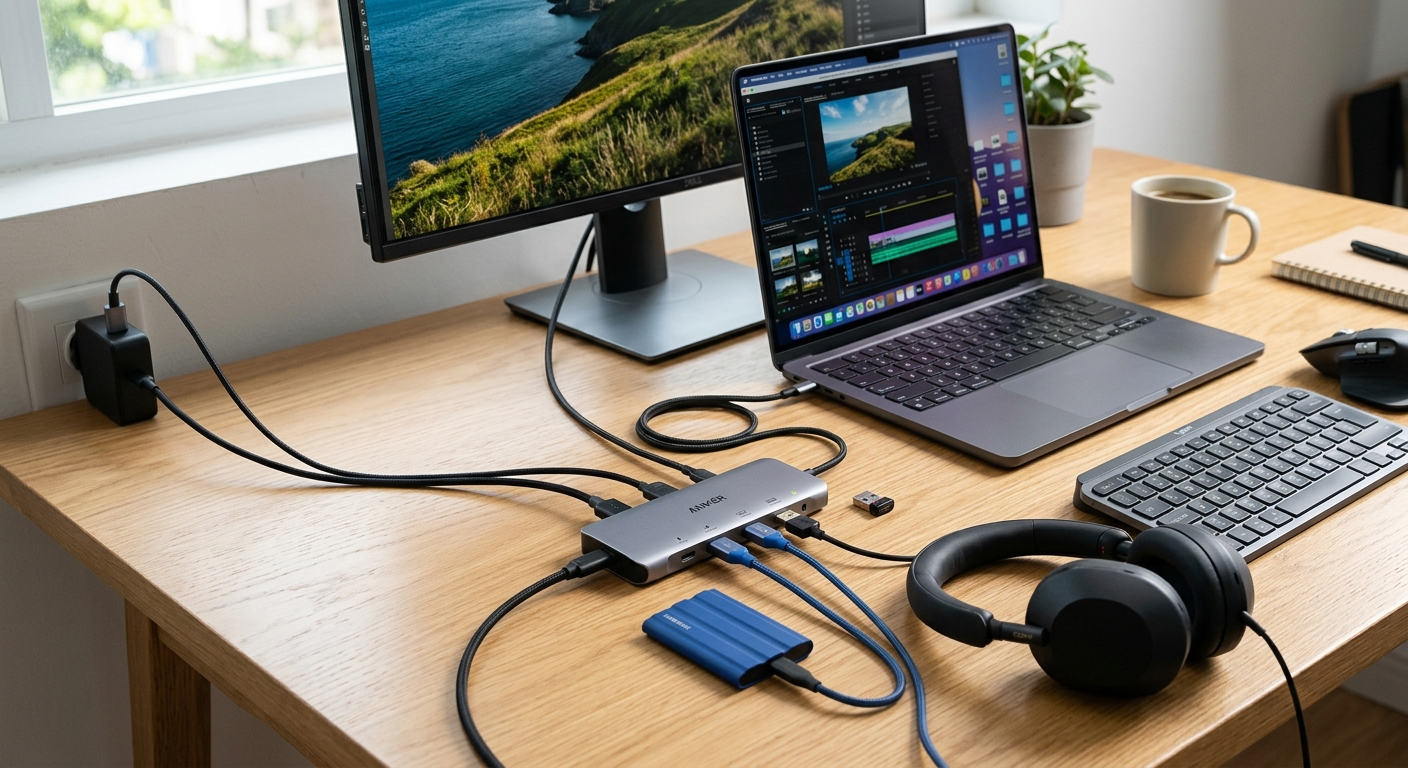
Single-Cable Minimalist Workspaces: Many professional-grade monitors now fully support direct Type-C connection. With just one single cable, you can simultaneously output 4K/8K video from a laptop, transfer data, and utilize the monitor to provide up to 140W of reverse PD (Power Delivery) power back to the laptop, achieving a truly clutter-free desktop environment.
-
Support for High Resolutions & Refresh Rates: It effortlessly supports extreme fluid video outputs of 8K/60Hz or 4K/240Hz. This explains why the latest tablets and smartphones can seamlessly connect to TVs or projectors via Type-C adapters for professional presentations or immersive gaming experiences.
3. Powerful Peripheral Expandability: The Soul of Docking Stations
Thanks to Type-C's internal 24-pin high-density design and agile bidirectional communication capabilities, it has become the technical core of modern docking stations and hubs.
-
Multi-tasking & High Integration: Through a single Type-C port, a docking station can simultaneously yield an RJ45 Ethernet port, multiple USB-A 3.2 interfaces, SD/microSD high-speed card readers, and multiple HDMI/DP outputs, perfectly solving the pain point of insufficient ports on ultra-thin laptops.
-
Realizing the Mobile Office: For mobile professionals pursuing lightweight setups, Type-C offers a plug-and-play solution. Tablets or smartphones connected to a docking station are instantly equipped with desktop-grade connectivity and productivity, effortlessly fulfilling multi-screen workflow demands.
4. Intelligent Bidirectional Transmission, Reverse Charging, and OTG Applications
Type-C completely shatters the strict physical boundaries between host devices (Host) and peripheral devices (Device) found in legacy USB specifications.
-
Bidirectional Power and Data Flow: Equipped with the USB Power Delivery (USB PD) protocol, your phone can not only be charged but can also transform into a power bank via Type-C, providing emergency power to Bluetooth earbuds, smartwatches, or even another phone.
-
Seamless OTG Connectivity & External Creation: Without needing a computer as a middleman, smartphones can directly read mass data from Type-C flash drives or connect to mice, professional keyboards, and even digital instruments (MIDI controllers) for music production, transforming mobile devices into professional creative tools.
Professional Q&A: USB Type-C Technology & Selection FAQ
Q1: Why can some Type-C cables transmit 4K video while others cannot?
A: Not all Type-C cables support video output. This depends on whether the cable features a built-in E-Marker chip and supports DisplayPort Alt Mode. When purchasing, look for cables explicitly labeled as "Full-Featured" or bearing the Thunderbolt logo to ensure stable video transmission.
Q2: Will using a smartphone charger to charge a laptop damage the device?
A: No. Type-C PD utilizes an intelligent communication mechanism where both devices negotiate voltage and current. If the smartphone charger's wattage is insufficient, the laptop may charge slowly or indicate that it is not charging, but it will not damage the hardware. It is recommended to use original or PD-certified chargers with adequate wattage for optimal performance.
Q3: How is the lifespan of Type-C connectors under frequent plugging and unplugging?
A: Standard Type-C connectors are designed for a mating lifespan of 10,000 cycles or more. The structure features excellent physical elasticity and stress-resistance design, ensuring high electrical stability and durability even in highly mobile working environments.
Conclusion: A Universally Unified Hardware Standard, Mastering the Future of Connectivity
The emergence of USB Type-C symbolizes the official arrival of the unified interface era. It not only optimizes the physical space of hardware but also drives a green revolution in the global electronics industry by offering high compatibility and reducing cable waste.
For corporate procurement and product developers, Type-C is no longer just an electronic component; it is the core infrastructure for high-speed computing, ultra-high-definition video, and intelligent IoT (Internet of Things) ecosystems. Whether in consumer electronics, automotive infotainment systems, or automated industrial equipment, mastering the multi-functional applications of Type-C means mastering the connectivity trends of the next decade.