
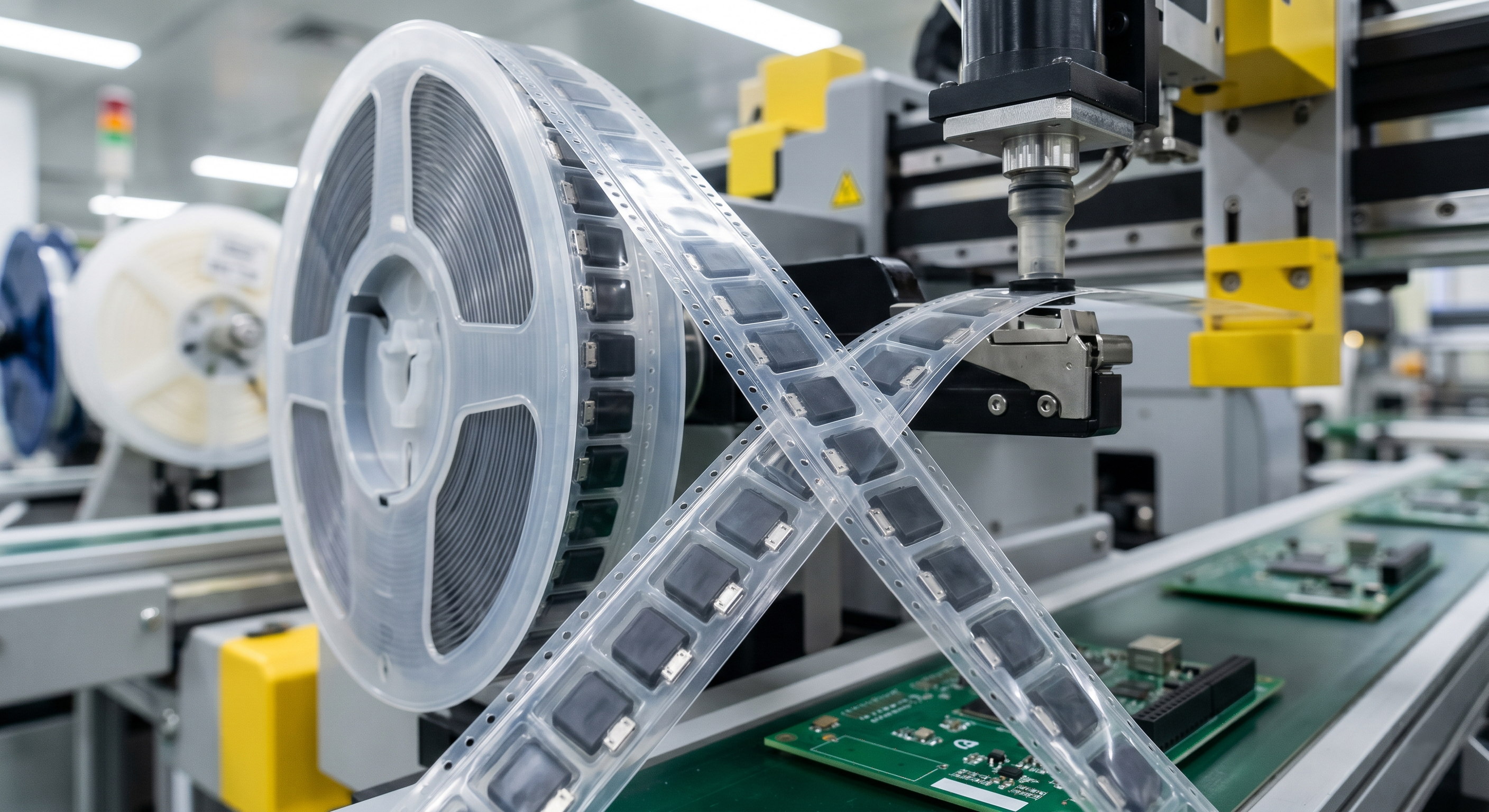
Hardware Essentials: Why Connectors Have "Caps"—The 3 Critical Roles of Pick-and-Place Caps
In the world of electronics manufacturing, the smallest details often dictate the success of a production line. When examining connectors in Tape & Reel packaging, you will often notice a small plastic cover or a high-temperature sticker on top. Commonly referred to as a Pick-and-Place Cap or Vacuum Cap, this component is far more than just protective packaging—it is a vital tool for automated assembly.
Here is a deep dive into the three core functions of these caps and how they impact production yield and efficiency.
1. Providing a "Pick-and-Place" Surface: The Heart of Automation
The primary reason for adding a cap is to facilitate the Surface Mount Technology (SMT) process. Modern PCBA (Printed Circuit Board Assembly) relies entirely on high-speed automated placement machines.
■ Solving the Surface Irregularity Challenge
Many high-performance connectors—such as USB Type-C, FPC connectors, or Pin Headers—feature irregular or hollow top surfaces. The vacuum nozzles of SMT machines require a flat, non-porous surface to create a vacuum seal and securely lift the component.
■ Precision Alignment and Placement
By adding a flat Pick-and-Place Cap, the nozzle can easily grip the center of the component. This stability ensures that the connector is placed with micron-level precision onto the PCB pads, significantly reducing the risk of "shifting" or "tombstoning" during the reflow process.
2. Physical Protection: Safeguarding Fragile Terminals
The soul of any connector lies in its internal metal terminals. These precision-engineered pins are extremely vulnerable to environmental factors and physical impact.
■ Contamination Barrier: During shipping and storage, the cap acts as a shield against dust, debris, and fibers. Maintaining a clean internal environment is critical for ensuring electrical conductivity and preventing "open circuit" issues after assembly.
■ Structural Integrity: If a reel is shaken during transit, the cap provides extra structural support. This prevents the delicate pins from bending or deforming (Pin Damage), which is especially vital for fine-pitch connectors where even a 0.1mm deviation can lead to total failure.
3. Optimizing Tape & Reel Packaging Efficiency
In mass production, efficiency is measured by the stability of the component feed.
■ Preventing Component Flipping
Working in tandem with the top Cover Tape, the connector’s individual cap ensures the part remains seated correctly within its pocket. This prevents the component from flipping or tilting sideways, which would otherwise cause the SMT machine to trigger an "error stop," lowering the MTBA (Mean Time Between Assists).
■ High-Temperature Resistance
These caps are typically made from high-performance polymers like LCP (Liquid Crystal Polymer) or High-Temperature Nylon (PA9T). They are designed to withstand the extreme heat of the Reflow Oven (up to 260°C) without deforming, ensuring they stay in place until the soldering process is complete.
Common Types of Pick-and-Place Solutions
To help procurement and engineering teams choose the right solution, we’ve compared the two most common methods:
|
Type |
Form |
Key Features |
|
Plastic Pick-and-Place Cap |
A rigid plastic "hat" snapped onto the connector. |
Provides maximum physical protection; ideal for highly irregular connectors; must be removed after soldering. |
|
Kapton Tape (Polyimide) |
A small, high-temperature circular sticker on the center. |
Low cost, zero footprint, and extreme heat resistance. Common for micro-connectors or low-profile designs. |
Professional Tip: The Critical Post-Soldering Check
Once the SMT soldering and AOI (Automated Optical Inspection) are finished, it is mandatory to ensure these caps are removed. Forgetting this step leads to two major risks:
- Mechanical Interference: The final product housing may not close properly due to the added height of the cap.
- Assembly Failure: The mating cable or Wire Harness cannot be inserted, leading to costly reworks or scrapped batches.
The Tiny Hero of Automation
While often overlooked, the connector cap is a testament to the sophistication of modern industrial automation. Understanding these hardware essentials not only improves assembly yields but also refines the DFM (Design for Manufacturing) mindset during the R&D phase.