
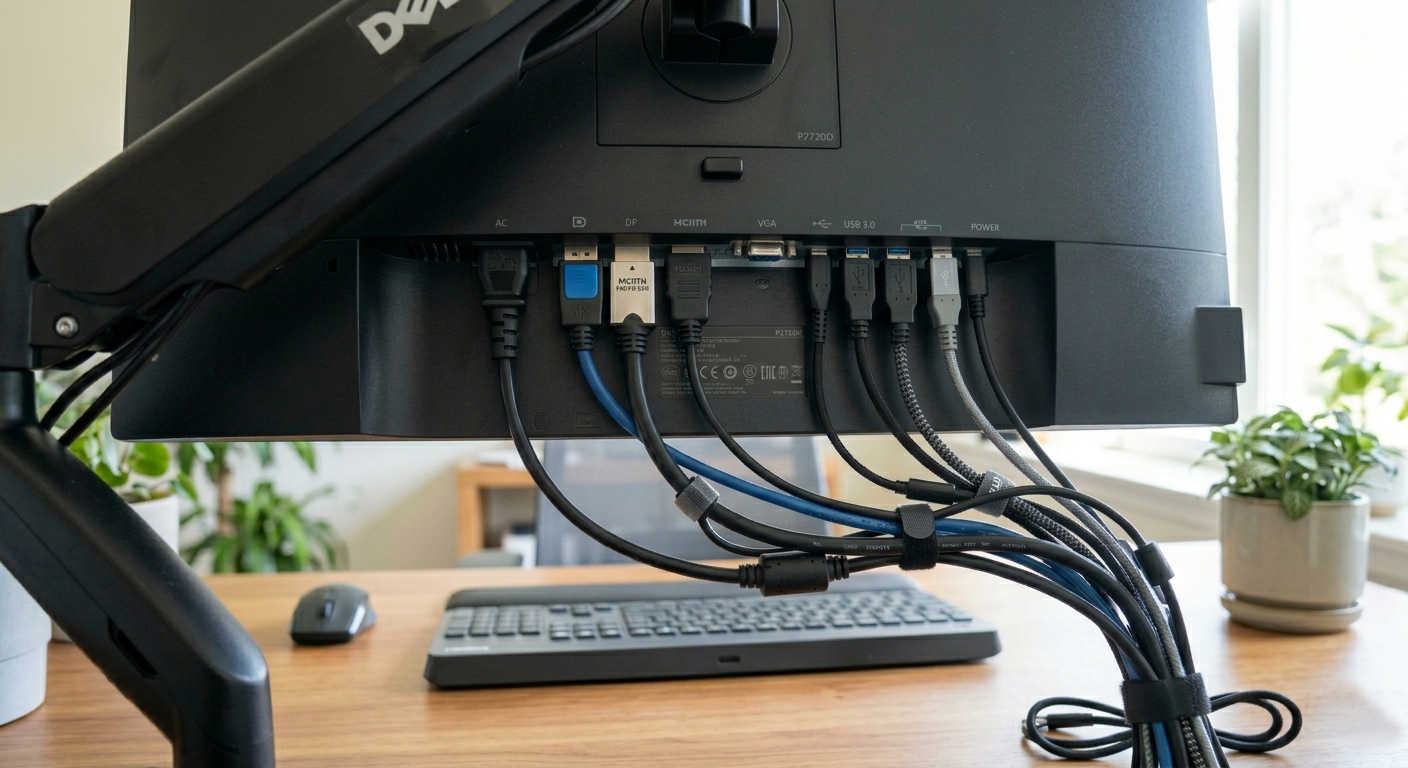
The Invisible Heroes Behind the Screen: A Deep Dive into Display Connector and High-Speed Cable Technology
When we stare at a display filled with vibrant colors and fluid refresh rates, few realize that inside and behind the chassis, thousands of electronic signals are racing through dense networks of cabling. A display’s ability to render 4K/8K high resolution, 240Hz+ refresh rates, or achieve an ultra-slim chassis design rarely depends on the panel alone. Instead, it relies heavily on its nervous system—Connectors and Cable Assemblies.
1. External Signal Transmission: Digital Bridges Connecting the World
External display cables are the most direct point of contact for users, responsible for precisely transmitting massive amounts of video data from the host system to the screen.
-
HDMI & DisplayPort: The Audio-Visual Titans These are the two dominant standards in the market. HDMI (High-Definition Multimedia Interface) is widely used in home entertainment and consumer electronics, whereas DisplayPort (DP) remains the top choice for competitive gamers and professional designers. With the adoption of the DisplayPort 2.1 standard, bandwidth has reached up to 80Gbps, enabling higher refresh rates and multi-monitor single-cable chaining (Daisy Chaining).
-
USB-C / Thunderbolt: The All-in-One Solution This has become the standard interface for modern high-end displays. Its greatest appeal lies in its versatility: a single cable can simultaneously handle 8K video transmission, data transfer, and even deliver up to 100W or 140W of power via USB Power Delivery (PD), completely clutter-proofing the desktop.
-
Legacy Interfaces: The Lasting Value of VGA & DVI While D-Sub (VGA) and DVI have gradually phased out of the mainstream consumer market, they continue to serve reliably in factory automation equipment, medical instruments, and legacy office setups due to their physical stability and robust locking mechanisms.
2. Internal Video Driving: The Key Technology Behind Resolution
Once the signal enters the display, the real challenge begins. To drive panels featuring millions or tens of millions of pixels, internal interconnection technologies must deliver exceptionally high speeds and ultimate noise immunity.
-
LVDS Technology: The Foundation of Stable Transmission Low-Voltage Differential Signaling (LVDS) was the most prevalent early internal standard. Highly noise-tolerant with low electromagnetic interference (EMI), LVDS is still widely deployed today in mid-to-low-end displays or industrial display modules.
-
eDP (Embedded DisplayPort): The High-End Display Standard With the widespread adoption of 4K and 8K, eDP has become the standard internal interface for laptops and premium monitors. Offering higher transmission efficiency and fewer pins than LVDS, eDP is the primary unsung driver enabling modern "narrow-bezel" and ultra-thin structural designs.
-
FPC / FFC: Maximizing Spatial Flexibility Flexible Printed Circuits (FPC) and Flexible Flat Cables (FFC) act as the internal ribbon cables of a screen. They route complex circuitry through extremely tight spaces, making them vital components in space-constrained mobile devices like smartphones and laptops.
3. Power & Backlighting: The Energy Source Behind the Glow
In addition to precise data transmission, power delivery and distribution are critical metrics dictating overall display quality.
-
High-Precision Backlight Harnesses These connect the driver board to the LED backlight strips. Though incredibly slim with tightly spaced configurations (such as 1.0mm or 0.5mm pitch), these wire harnesses must handle stable current output to ensure uniform screen brightness, prevent flickering, and extend the lifespan of the panel.
-
Power Control Harnesses & Signal Synchronization These interconnect the internal power supply unit (PSU), main controller board (AD Board), and the side OSD (On-Screen Display) control buttons. This ensures that power sequences, HDR mode switching, and menu adjustments operate flawlessly across various electrical environments.
4. The Pursuit of Technical Perfection: Four Core Metrics
Premium display cables and connectors must satisfy four stringent metrics concerning Signal Integrity (SI):
-
Precise Impedance Matching: Ensures high-speed data travels without reflections or attenuation, which is paramount for high-refresh-rate monitors running at 144Hz and beyond.
-
Superior EMI/EMC Shielding: Utilizing high-density aluminum foil or braided metal shielding, paired with Micro-Coaxial wire technology, effectively blocks electromagnetic interference to preserve image quality and prevent ghosting or artifacts.
-
High Flex Life and Mechanical Longevity: Especially around laptop hinges or the latest foldable screens, internal cabling must endure tens of thousands—or even hundreds of thousands—of opening and closing cycles without degradation.
-
High Density and Miniaturization Trends: As technology demands thinner profiles, internal connector pitches have been pushed to their limits down to 0.5mm or even 0.3mm, imposing extreme precision demands on manufacturing and production lines.
Technical Q&A: Common Questions on Display Connection Technology
Q1: Why does my screen occasionally go black or show snow/flicker when using a cheap HDMI cable?
A: This is typically caused by poor shielding or an impedance mismatch within the cable. During high-resolution, high-bandwidth transmissions, ambient electromagnetic interference can cause severe signal attenuation. It is highly recommended to use certified high-speed cables to guarantee adequate bandwidth and robust noise immunity.
Q2: What is the biggest advantage of an eDP connector compared to traditional LVDS?
A: eDP is based on the DisplayPort protocol, which yields significantly higher data throughput. It can transmit higher-resolution video using fewer wire pairs. This not only reclaims valuable routing space inside laptops but also lowers power consumption, directly extending the battery life of mobile devices.
Q3: Can a damaged internal FPC ribbon cable be repaired?
A: Because FPC cables are extremely thin and feature high-density traces, they are nearly impossible to repair once fractured; a complete replacement of the cable assembly is usually required. Consequently, designing robust stiffeners and secure locking mechanisms at the connection points during the initial R&D stage is absolutely critical.
Tiny Links, Peak Visions
From a visible external HDMI cable to the hidden internal eDP high-speed ribbon lines and micro-coaxial connectors, every single pixel on a display relies deeply on these precise interconnection technologies. The next time you immerse yourself in a fluid AAA gaming session or enjoy a High Dynamic Range (HDR) movie, take a moment to appreciate these invisible heroes operating silently inside the chassis. Through their rock-solid delivery of power and data, the light of the digital world is brought vividly to life.