
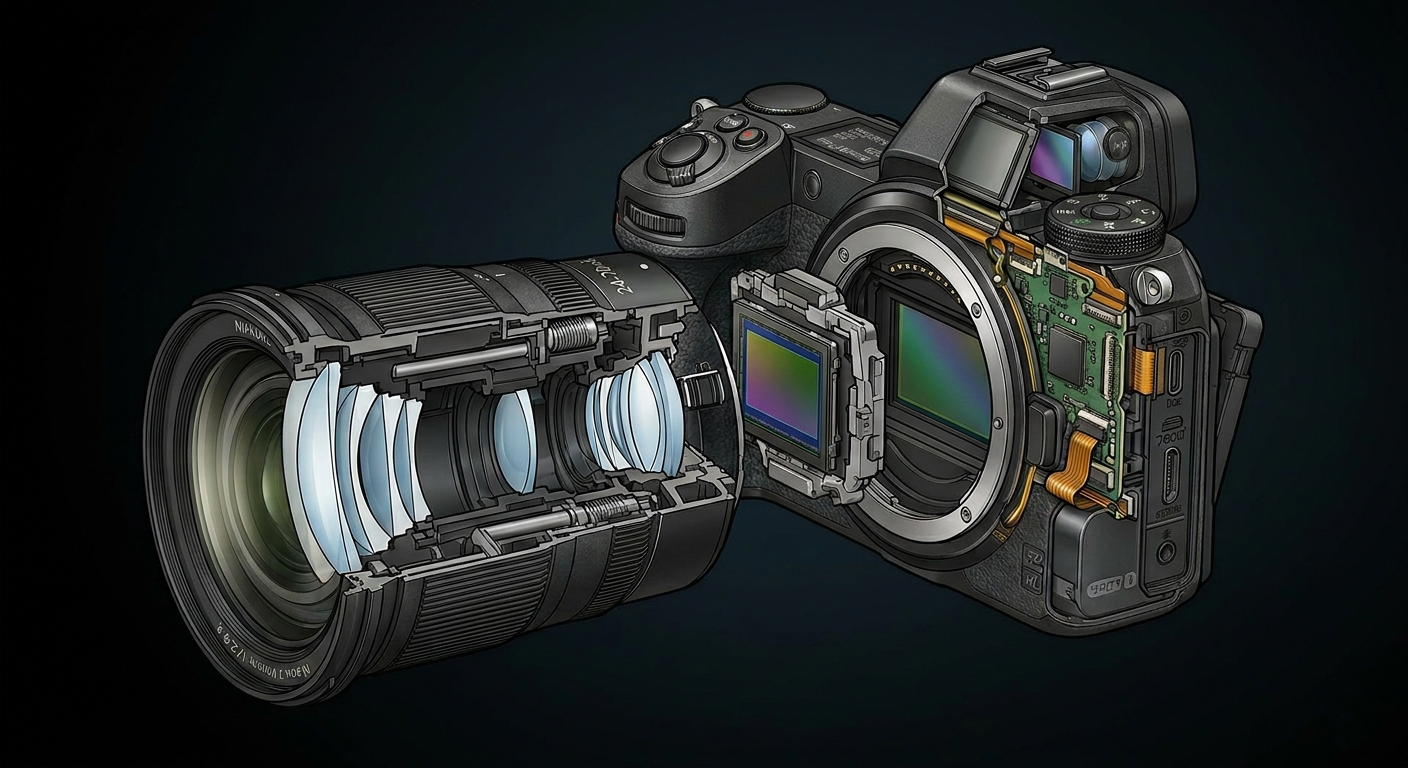
 DSLR Camera Connectors and Cables: Technical Specifications
DSLR cameras combine precision optics and advanced electronics. Their internal spaces are extremely limited and must process high-frequency signals. Therefore, the connectors and cables used must offer high density, high transmission rates, and excellent vibration resistance.
Here is the classification of common connectors and cables found in DSLR cameras:
1. Internal Board-to-Board and Board-to-Wire Connections
Inside the camera body, the mainboard must connect to the image sensor, image processor, display screen, and button modules. The primary components used include:
■ FPC/FFC Connectors (Flexible Printed Circuit / Flat Flexible Cable): The most common connection method in cameras. Due to cramped internal space and articulating or moving parts like screens or buttons, fine-pitch FPC connectors (such as 0.3mm or 0.5mm) are widely used to interconnect modules.
■ Micro-Coaxial Cables: Used for high-speed data transmission between the image sensor and the mainboard. These cables provide excellent electromagnetic interference (EMI) shielding, ensuring high-definition video signals remain interference-free during transmission.
■ BTB Connectors (Board-to-Board): Used to vertically stack two circuit boards (such as the mainboard and the power board), providing a reliable mechanical connection and multi-signal transmission.
2. External Transmission and Interface Connections
These bridge communication between the camera and external equipment like computers, monitors, and storage devices:
■ USB Type-C / Micro-USB: Modern cameras mostly adopt USB Type-C for data transfer and charging. These must comply with USB 3.2 or higher standards to support fast transmission of 4K video.
■ HDMI Connectors (HDMI Type C/D): DSLR cameras typically use Mini HDMI (Type C) or Micro HDMI (Type D) to output video to external monitors.
■ SD/CFexpress Card Slots: Used to connect high-speed memory cards. CFexpress utilizes the PCIe interface protocol, requiring slot connectors designed to withstand frequent insertions while maintaining high-speed stability.
3. Lens Mount and Control Contacts
Communication between the camera body and the lens is critical for ensuring precise autofocus and aperture control:
4. Power and Peripheral Expansion
■ Battery Connectors: Leaf-spring style connectors inside the camera body that interface with the battery pack. They require low contact resistance to handle high-current discharge during burst shooting or video recording.
■ Audio Jacks (TRS): 3.5mm microphone input and headphone monitoring jacks. These typically feature gold-plated connectors with excellent conductivity and wear resistance.
Summary Table
|
Application |
Recommended Connector / Cable Type |
Core Requirement |
|---|---|---|
|
Internal Signal |
FPC/FFC, Micro-Coaxial Cable |
Ultra-thin, EMI Shielding |
|
External Transmission |
USB Type-C, Micro HDMI |
High-speed, Durability |
|
Lens Communication |
Pogo Pin (Spring-loaded) |
Mechanical Stability |
|
Image Processing |
High-speed BTB Connector |
High-density Pins |
The design trend of DSLR cameras is moving toward smaller form factors and higher bandwidths. Consequently, requirements for fine-pitch technology and high-frequency signal integrity will only become increasingly stringent.