
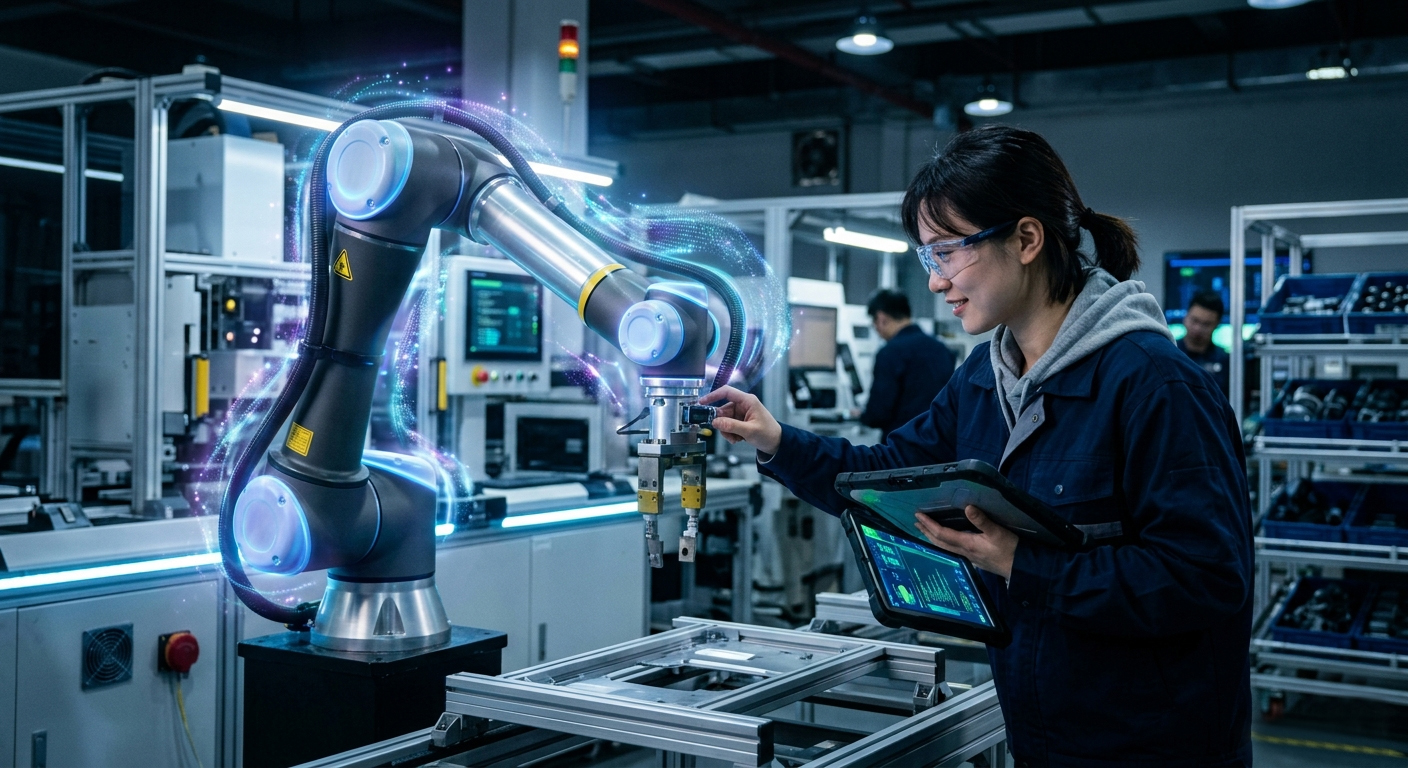
Steel Chassis, Digital Soul: Breathing Life into Smart Factory Robotic Arms
In today’s smart factories, robotic arms are no longer mere iron bars repeating monotonous motions. Thanks to breakthroughs in AI vision, 6-axis force sensing, and edge computing, modern robotic arms exhibit unprecedented agility. However, to truly endow these steel structures with a "soul," the secret lies not in the external skeleton, but in the sophisticated dynamic cabling and high-quality connectors that function as their nervous system. If the processor is the brain, then modular cabling is the critical conduit delivering consciousness and energy.
1. Reengineering the Neural System: Cabling Craftsmanship in High-Dynamic Environments
The soul of a robotic arm is reflected in its precise, fluid, and uninterrupted movements. This demands exceptionally rigorous physical performance from its internal nervous system—the cables and connectors:
-
Extreme Fatigue Resistance & PUR Material Application: Under 6-axis coordinated motion, internal wire harnesses undergo dozens of complex twists per minute. Utilizing PUR (Polyurethane) as the cable jacket, combined with a specialized high-flex stranding process, ensures zero-latency signal transmission even after more than 5 million bending and twisting cycles.
-
Dual-Layer Shielding: Defending Against Industrial EMI: Factory environments are rife with noise generated by high-power motors. Through dual-layer shielded connectors and low-impedance grounding designs, weak sensor signals (such as 0-10V or 4-20mA) are shielded from interference, giving the robotic arm a sense of touch as sensitive as human skin.
-
Plug-and-Play Modular Interfaces (M12/M8): Transforming complex internal wiring into IP67/IP69K-rated plug-and-play modules. This not only makes assembly as precise as building blocks but also enables second-level replacements in the event of a fault, maximizing the Overall Equipment Effectiveness (OEE).
2. Green Genes: Infusing the Industrial Soul with Sustainable ESG Value
A truly soulful robotic arm must align with green supply chain standards. We embed our commitment to sustainability into every single process:
1.Low-Carbon Materials & Lightweight Design:
By introducing recycled aluminum alloys and Low Smoke Zero Halogen (LSZH) materials into the arm's connection components, we reduce the product's full life-cycle carbon footprint. Furthermore, the reduced dead weight lowers motor energy consumption, directly contributing to Scope 3 carbon reduction targets.
2.Energy-Regenerative Drive Cabling:
Through high-efficiency power module cabling, the kinetic energy generated during the robotic arm's deceleration is fed back into the power grid. Every component carrying a green commitment beats for the sustainability of our planet.
3. Connections of Trust: Deep Practice of the 5-Step Customization SOP
Infusing a soul into a robotic arm is a journey of precise alignment from requirements to mass production. We ensure quality through a standardized workflow adhering to ISO 9001/IATF 16949 standards:
Step 1. In-Depth Scenario Discussion: Understanding the arm's application environment (e.g., semiconductor cleanrooms or high-temperature welding lines).
Step 2. Dynamic Stress Simulation: Recommending the most suitable wire gauge and connector specifications based on the arm's motion paths.
Step 3. Rigorous Fatigue Testing: Simulating transmission loss and physical wear under extreme movements in the laboratory.
Step 4. UI/UX Routing Fine-Tuning: Optimizing the mechanical layout against actual installation interference to ensure maintenance convenience.
Step 5. Automated Deployment Integration: Ensuring every modular cabling system becomes the most reliable nervous system for the arm.
Professional Q&A: Common FAQ on Robotic Arm Cabling Technology
Q1: Why must robotic arm wire harnesses explicitly emphasize "Torsion Resistance"?
A: Traditional drag chain cables can only handle linear, single-axis bending. However, the 4th to 6th axes of a robotic arm involve rotations exceeding 360 degrees. Without specialized wrapping techniques, internal copper conductors will break due to the spiral effect. Dedicated torsion-resistant cables can withstand extreme deformations of ±180 °/m
Q2: How do you solve cable degradation issues for robotic arms in high-temperature welding environments?
A: We recommend selecting cables with Teflon (PTFE) or cross-linked polyethylene (XLPE) jackets, which withstand high-temperature welding spatters. Concurrently, pairing them with high-quality gold-plated connector contacts prevents contact resistance from rising in high-temperature, oxidizing environments.
Q3: What are the cost benefits of modular cabling for smart factories?
A: Modular design reduces on-site wiring time by approximately 40% and significantly minimizes the risk of human wiring errors. Against the backdrop of rising labor costs, this is a pivotal strategy for accelerating factory deployment and lowering Operating Expenses (OPEX).
Connecting Intelligence, Driving the Future of Industry
When a robotic arm is equipped with stable signals, efficient power, and green genes, it ceases to be a mere production tool—it becomes a soulful partner in the smart factory. Having deeply cultivated the electronics and automation industries for years, we firmly believe that these minuscule connectors and cable harnesses are precisely the strongest forces driving the world toward the pinnacle of automation.