
Connecting Sustainability: The Core Role and Restorative Transformation of Electronic Connection Solutions in the ESG Era
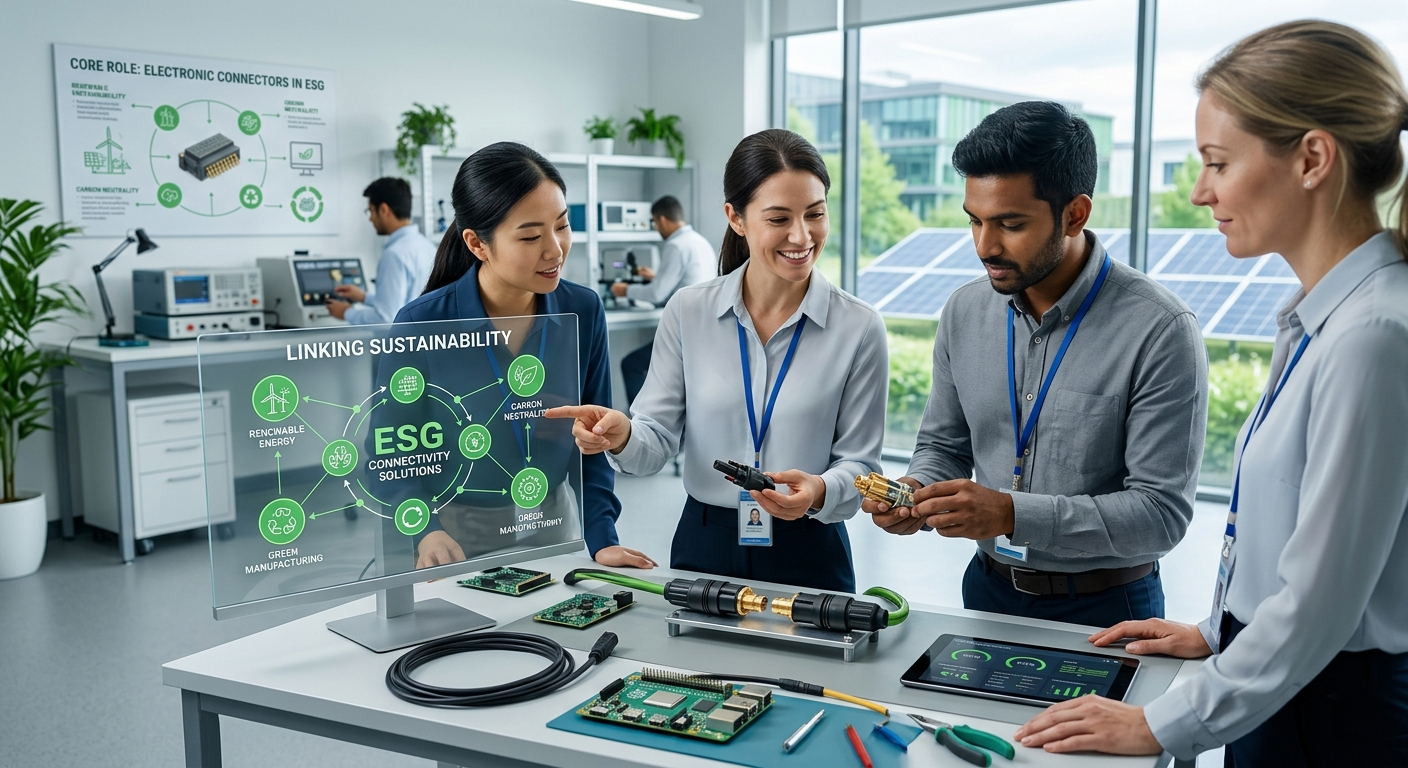
In the intricate landscape of modern technology, electronic connectors and wire harnesses are often perceived as silent supporting characters. However, as the global community enters the ESG (Environmental, Social, and Governance) era, these digital bridges—responsible for transmitting power and signals—are transforming from mere components into a pivotal force driving enterprises into a "restorative mode." High-quality connection solutions have now become a core benchmark for measuring a company's sustainable competitiveness.
I. E (Environmental): Micro-Technology Driving Macro-Carbon Reduction
In the realm of environmental protection, the contribution of electronic connection solutions goes beyond just reducing emissions; it represents the ultimate pursuit of energy efficiency and resource circularity.
-
High-Efficiency Transmission and Ultra-Low Contact Resistance: Precise connector design minimizes contact resistance (Rcontact), thereby reducing thermal power loss (Ploss=I2R) during power transmission. In energy-intensive applications such as data centers, servers, or Electric Vehicle (EV) powertrain systems, every fraction of a milliohm reduced directly translates into a significant decrease in carbon emissions.
-
Green Material Standards and Process Innovation: Leading manufacturers are comprehensively adopting eco-friendly materials compliant with RoHS 2.0 and REACH standards (such as halogen-free plastics and lead-free plating). By optimizing Surface Mount Technology (SMT) and automated crimping processes, production yields are maximized, minimizing electronic waste (e-Waste) at the source.
-
Design for Circularity (DfC): Through modular and easy-to-disassemble connection structures, wire harnesses and connectors can be effortlessly separated and re-entered into material recycling streams when end-use electronic products reach their end-of-life. This prevents them from ending up in landfills and fully realizes the core value of a circular economy.
II. S (Social): Connecting Safety, Trust, and Industrial Responsibility
Social responsibility is not merely about corporate philanthropy; it is about safeguarding human life through product reliability and ensuring equity across the supply chain.
-
Safeguarding Life-Critical Applications: In medical devices (ISO 13485), aerospace communications, and automotive electronics, the stability of a connector directly impacts human safety. Delivering high-quality, high-reliability connection solutions to prevent equipment failure caused by intermittent contact is, in itself, the most fundamental safety commitment a company can make to society.
-
Conflict Minerals Management and Supply Chain Transparency: ESG frameworks require enterprises to ensure that raw materials (such as copper, gold, and tin) are responsibly sourced and free from human rights exploitation. Through stringent supplier codes of conduct and traceability systems, the electronic interconnect industry is forging a clean, transparent value chain.
-
Technical Knowledge Transfer and Workplace Diversity (DEI): Precision manufacturing and engineering rely heavily on the heritage of professional expertise. By fostering a diverse, equitable, and inclusive (DEI) workplace culture alongside structured technical training, enterprises strengthen the deep-rooted bond between the industry and local workforces.
III. G (Governance): Integrity as the Foundation for Stable Electrical Connectivity
Corporate governance serves as the bedrock for sustainable corporate operations. For technology-driven connection solution providers, the quality of governance is directly reflected in long-term product compliance.
-
Integrity as the Ultimate Metric of Quality: When facing stringent customer specifications and tight delivery schedules, uncompromising adherence to quality standards is the only path to winning the long-term partnership and trust of global technology leaders. A governance culture rooted in integrity ensures that actual product performance matches technical specifications precisely.
-
Regulatory Compliance and Global Trade Risk Management: In response to the European Union's Carbon Border Adjustment Mechanism (CBAM) and evolving international carbon tax policies, a robust governance framework enables companies to proactively conduct product carbon footprint verifications (ISO 14064). This strategic foresight transforms regulatory compliance into a competitive advantage for entering high-end global markets.
Technical Q&A: Addressing Electronic Interconnect Pain Points Under ESG Trends
Q1: Will pursuing ESG initiatives lead to a substantial increase in the cost of connection solutions?
A: In the short term, adopting eco-friendly materials and obtaining green certifications will inevitably increase R&D and procurement expenses. However, from a long-term perspective, the low failure rates and high energy efficiency delivered by premium connectors—combined with compliance that bypasses carbon tariffs—will significantly optimize the Total Cost of Ownership (TCO), generating distinct financial advantages.
Q2: How can we verify if a connector supplier possesses genuine green manufacturing capabilities?
A: Priority should be given to auditing whether the supplier holds an ISO 14001 (Environmental Management System) certification and if their products are backed by comprehensive, third-party testing reports (such as RoHS/REACH compliance reports issued by SGS). Furthermore, factories utilizing automated production and real-time yield monitoring typically demonstrate superior performance in minimizing resource waste.
Q3: What specific contribution does modular connection design make to ESG?
A: Modular design enables localized repair and maintenance instead of complete system replacement. When a specific function within a piece of equipment fails, the device can be restored simply by replacing the corresponding connection module. This significantly extends the service life of the entire system and minimizes material waste during maintenance.
Precise Connections, Restoring the Future
In the past, industrial enterprises were often viewed solely as resource consumers. Today, under the guidance of ESG principles, electronic connection solutions are revealing their immense potential as "restorers." We are no longer merely assembling wires or soldering terminals; we are connecting a more energy-efficient, secure, and trustworthy intelligent future.
When every single electrical connection carries a commitment to sustainability, corporate profitability transcends mere financial figures—it becomes the ultimate reward for driving the sustainable prosperity of civilization and restoring the ecology of our planet.